- Why adult learning matters: Around 80% of the UK’s 2030 workforce is already in work (NFER), so productivity depends on retraining adults.
- Funding is falling: Spending on classroom-based adult learning is down 70% in real terms since the early 2000s, and 56% of providers in the October 2026 APPG inquiry said they often turn adults away.
- What the APPG wants: Adult education treated as essential national infrastructure, with a minimum offer for every adult in England up to Level 3.
- How blended learning helps: Mindful Education’s Online and On Campus model typically needs half the campus time of classroom-only delivery, so adults can study around work.
Why adult learning matters

At a glance
Understanding why adult learning matters starts with what it quietly achieves. It gives people the practical skills to change or restart their careers, it helps businesses develop the staff they already have, and it helps communities adapt as local economies change. The benefits of adult learning are well documented, for people’s wellbeing as much as for the economy, yet support and funding for adult learners routinely slip down the national policy agenda.
So why is adult learning so often treated as an afterthought? Part of the problem is an outdated assumption that education is something you finish in your late teens or early twenties – when people talk about education, they usually mean children and young adults starting out in their careers. By overlooking how much learning happens later in life – and how much more of it the country will need in the years ahead – means that this view no longer matches modern reality.
As jobs change, and with new technology and AI altering traditional workplace structures, adults need clear routes to refresh their skills and retrain at several points in their careers.
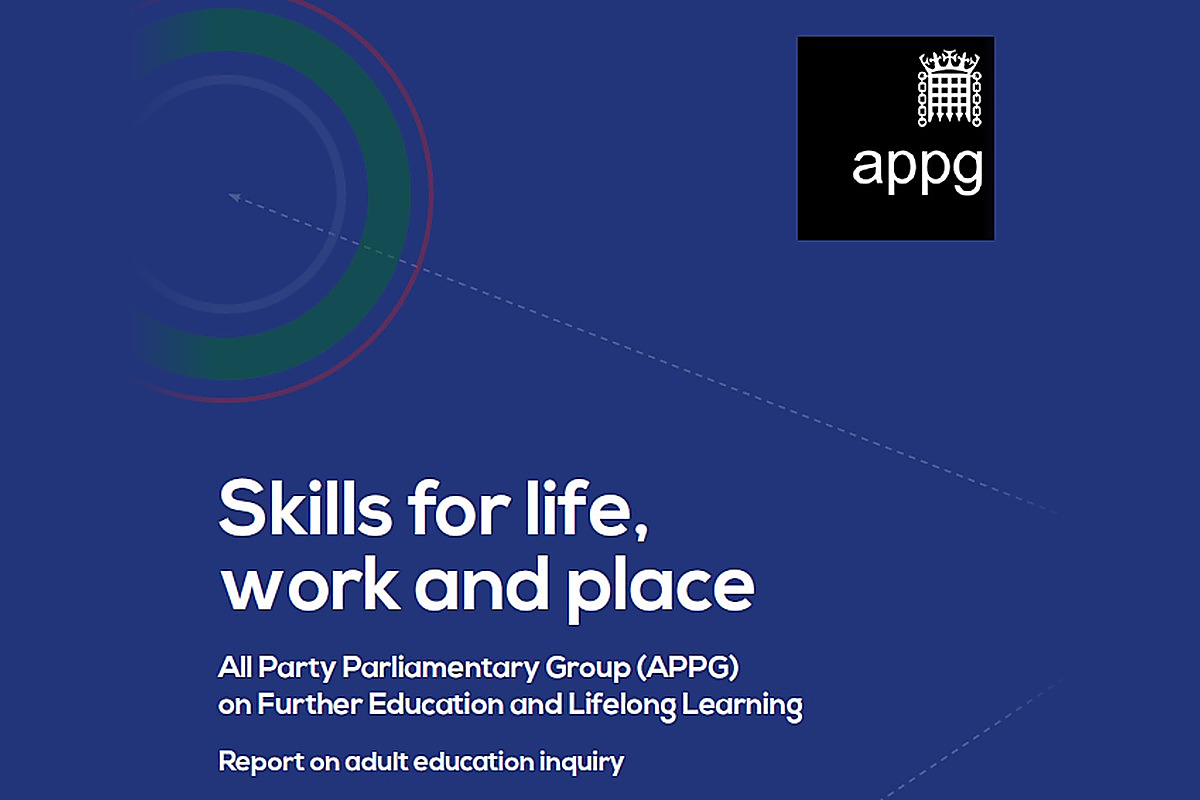
On 21 October 2026, the case for adult learning gained cross-party backing. Skills for life, work and place is the report of an inquiry into adult education by the All-Party Parliamentary Group (APPG) on Further Education and Lifelong Learning. This report draws on evidence from more than 150 contributors, including Mindful Education and it concludes that adult education has suffered decades of underinvestment and should be treated as essential national infrastructure.
The personal impact of adult education
Discussions about qualifications tend to focus on earnings and employability. Those outcomes matter, but they don’t explain why adults go back to education, or what it does for them.
Returning to study as an adult is rarely a quick decision. For many people it marks a deliberate turning point, whether they want to progress in their field, move into a new one or rebuild after a change at home. It can also be daunting, raising concerns about fitting study around work or family, keeping up after years away from formal education, and the financial impact of retraining.
With the right support, the benefits of lifelong learning go well beyond a certificate. As well as career progression, study can rebuild confidence, and for people whose days are taken up by work or caring, it can also give them something that is theirs alone.
Changing careers through flexible study
Ben Hodgson’s story shows what retraining as an adult looks like in practice.
In his thirties, Ben wanted to leave warehouse shift work for a career with more family-friendly hours. He trained as an accountant through Mindful Education’s Online and On Campus model, which is built around supporting adult learners to balance work and study.
With support from his employer, Ben worked through his accounting qualifications and is now a Commercial Finance Manager.
For Ben, a qualification was the way into a different working life, on terms that suited his family.
“It's changed my life – I feel like I've won the lottery.”
The business case for adult learning
For employers, the skills conversation usually starts with recruitment. Organisations spend a lot of time and money competing for the same small pool of qualified candidates.
The strategic value of adult education for employers is that it offers another option: developing the people they already have.
Apprenticeships are one of the most effective ways to upskill existing team members, by combining paid work with accredited training. Since the Apprenticeship Levy became the Growth and Skills Levy, employers can also use apprenticeship units – short courses of 30 to 140 hours – to upskill staff in priority areas. However, the rules have tightened recently: unused levy funds now expire after 12 months, and most Level 7 apprenticeships are no longer publicly funded for learners aged 22 and over. In addition, the government took the decision to de-fund management apprenticeships at Level 3 and Level 5 that were popular and effective ways for employers to upskill existing team members.
Many employers want to support study but worry about the effect on day-to-day work. Releasing people for full days of off-site training is hard on small teams. Flexible delivery makes workforce development easier to manage. Staff study online around their working day and attend scheduled tutor-led sessions, either in person or virtually, so they build accredited expertise without long spells away from their roles. For apprentices, it also makes off-the-job training easier to plan.
Upskilling existing staff is increasingly seen as a sound commercial decision rather than an overhead. People who already know an organisation’s systems and clients are a lower-risk investment than external hires. When employers back staff to gain professional qualifications, they build technical capability and clearer progression routes, and they keep people for longer.
Growing your own talent is an efficient way to build a workforce that can adapt as the business changes.
The broader social and economic return
Salary rises and business output are easy to measure. The wider value of adult learning is harder to quantify, but local colleges and adult education providers play a large part in keeping regional economies and communities going.
When accessible education is rooted in local areas, communities are better placed to cope with economic change. As industries shift and technology reshapes local job markets, closing the skills gap through adult education stops regional talent pools falling behind. People can progress where they live instead of moving to a big city to find work.
Devolution gives local areas the power to shape provision around their own labour markets, and around three quarters of England’s £1.4 billion Adult Skills Fund is now devolved. But as the APPG report points out, this has created a patchwork of different funding rules, and providers need multi-year certainty to plan provision that keeps talent local.
There are also considerable positive impacts on wellbeing. Adult classes, on campus or online, bring together people of different ages and backgrounds. The Learning and Work Institute’s Adult Participation in Learning Survey found that around two thirds of adult learners report work-related benefits, and almost half report improvements in wellbeing and confidence. Studying alongside others can also reduce isolation.
There’s an intergenerational benefit too. When parents and grandparents return to study, learning becomes normalised in the household, and that can raise aspirations among younger family members.
Seen at scale, a coherent adult skills strategy in FE is a national investment in local economies and communities. It can also ease long-term pressure on health and social care, which is why the APPG wants adult learning built into national and local preventative health strategies.
Overcoming barriers: how blended learning supports adult learners
For most adults, the barrier to returning to education isn’t a lack of ambition. Work and family commitments, distance from a college or low confidence can all put learning out of reach. If a course needs classroom attendance several evenings a week, many working adults simply can’t commit.
For providers, the barriers are just as real. Public spending on classroom-based adult learning has fallen by 70% in real terms since the early 2000s, according to evidence in the APPG report. More than half of the providers who responded (56%) said they often or very often turn adult learners away because of funding and eligibility rules. Over 80% named funding as a major barrier to tackling skills shortages.
Fully online, unguided study isn’t the answer either. Without structure and contact with others, completion rates can suffer. Whild adults seek the freedom to study at their own pace, many see benefits from regular contact with tutors and classmates to stay on track.
Blended learning offers the best of both worlds. Mindful Education’s Online and On Campus model typically needs half the campus attendance of classroom-only delivery. Learners study online around their work and family commitments, then come together for tutor-led sessions.
Flexible learning models for further education colleges take unnecessary friction out of studying. They also let providers serve more adults without adding pressure on campus space or timetables.
Why adult learning matters for a future-ready economy
The idea that education ends in early adulthood doesn’t fit the UK economy. According to NFER, 80% of the people who will make up the 2030 workforce are already in work. Future productivity depends on upskilling and retraining them.
This is the case the Association of Colleges’ Adult Learning Pays campaign and the APPG are making. New qualifications open up progression for individuals, and for employers, growing their own talent is a lower-risk answer to skills shortages. In local areas, accessible training keeps workforces strong and communities connected.
Getting those returns depends on training that fits adults’ lives. Rigid, classroom-only provision deters people with jobs and families, while learners on unsupported distance courses too often drop out. Blended learning combines independent online study with tutor-led campus sessions, and shows how providers can widen access without lowering standards.
What needs to happen next
Policy is starting to move. The Apprenticeship Levy has become the Growth and Skills Levy, opening up shorter, modular training. The Lifelong Learning Entitlement opened for applications in September 2026, and the first courses start in January 2027. But as the APPG report notes, the LLE is no substitute for properly funded provision up to Level 3: policy also only works if the delivery behind it does.
Colleges, employers and policymakers each have a part to play:
- Employers should plan levy spend carefully, using apprenticeships and apprenticeship units to upskill existing staff before funds expire. That means investing in long-term capability rather than short-term recruitment fixes.
- FE colleges and training providers should keep expanding flexible, blended models that work for adults in jobs and for local businesses.
- Policymakers should act on the APPG’s recommendations. These include a minimum adult learning offer for every adult in England up to Level 3, multi-year investment, and a framework to measure the social and economic impact of adult learning. Funding rules should also support flexible, blended delivery.
As Jonathan Brash MP, Chair of the APPG, noted: “Adult education should not be seen as a cost, but as an investment in people and in our country”.
Adult learning belongs at the centre of the UK’s industrial strategy. Pairing flexible delivery with the new funding rules is how the country builds a workforce ready for the next decade.
Using blended learning to meet adult learning needs
Grow your adult learner numbers without adding pressure on classroom space. Talk to us about how colleges are using Mindful Education’s Online and On Campus model to expand professional qualifications for working adults.
Contact us at partnerships@mindful-education.co.uk to find out more.
Rebecca Ross
Head of Marketing (Communications and Events)
Rebecca leads Mindful Education’s content and communications strategy, as well as managing our extensive events, exhibition and sponsorship programme.